


Uncontested (Amphur) Divorce in Thailand (Steps, Documents, and How Your Agreement Fits In)
A practical guide for foreigners divorcing a Thai spouse by mutual consent at the district office (amphur). Learn what Form B, Kor Ror 6, and Kor Ror 7 are, when to sign them, what to bring, and how to make your Thai–English Divorce Agreement “amphur-ready. If your marriage was not recorded in Thailand, you cannot use the Amphur/Khet administrative divorce process. In that case, you will need a court divorce judgment, which can then be registered in Thailand.
Page Menu
The 3 Key Papers You’ll Hear About
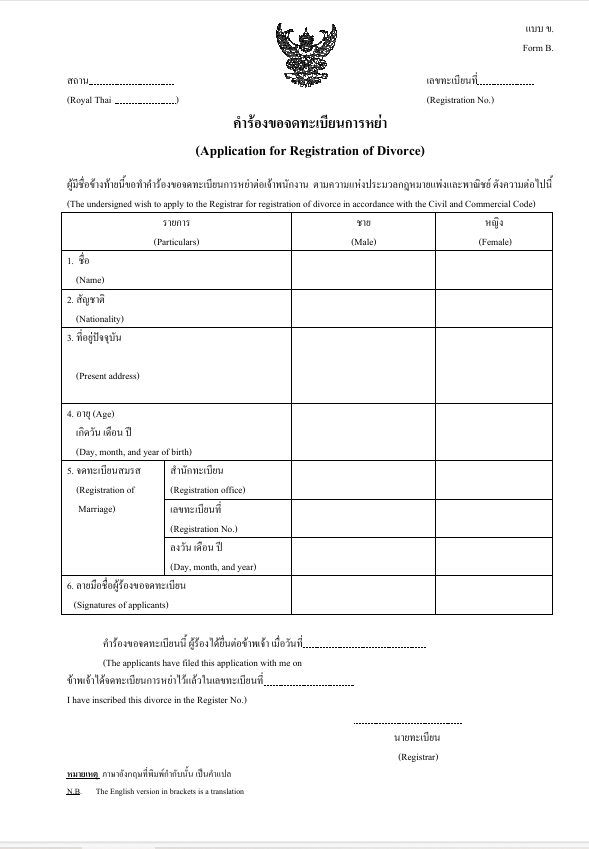
Form B (แบบ ข.) — Application for Registration of Divorce
The application you both sign at the counter to request a mutual-consent divorce. It captures your particulars and confirms consent so the registrar can proceed.
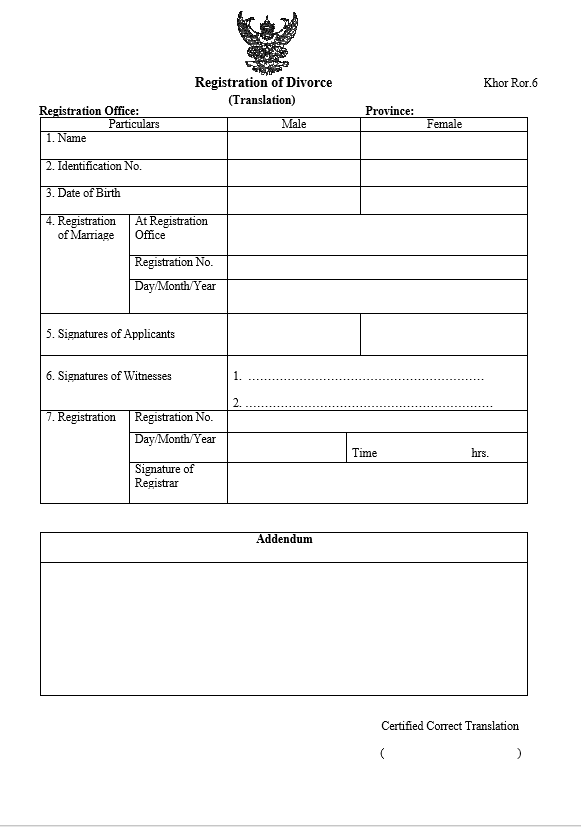
Kor Ror 6 (คร.6) — Divorce Registration
The official divorce register created after the registrar approves your application and agreement. It records the essential facts and any terms you ask to be recorded. The office keeps the KR6.
Most offices also issue Kor Ror 7 (คร.7) — the Divorce Certificate — for each spouse to take home.
Are Form B and KR6/KR7 Signed the Same Day?
Typically yes. In a standard mutual-consent divorce where both spouses attend the same office, you sign Form B first; the registrar then prepares Kor Ror 6 and Kor Ror 7. You and two witnesses sign as required. You usually take home KR7 the same day, while the office keeps Form B and KR6.
Legal Basis for Mutual-Consent Divorce
Thai law recognizes divorce either by court judgment or by mutual consent. A consent divorce must be in writing and signed by both spouses in the presence of two witnesses — this written document is your Divorce Agreement.
- Witnesses: If you do not have witnesses available, many Amphur/Khet offices can help provide witnesses (practice may vary by office).
- Different offices: If you cannot attend the same Amphur/Khet, you may file at different offices (even in different provinces). The divorce becomes effective once the second office completes the registration.
What to Bring (Checklist)
- IDs: Thai ID card / ThaID app for the Thai spouse; passport for the foreign spouse.
- Divorce Agreement: Thai or Thai–English; signed by both spouses and two witnesses. Many offices allow signing on the day using staff as witnesses.
- Marriage papers: Marriage certificate (Kor Ror 3) and, if available, the marriage register extract (Kor Ror 2).
- Children’s documents: Birth certificates if you are recording custody or support terms.
- Prenuptial agreement: If relevant to asset division.
- Small fees: Registration is typically free; certified copies/extracts have minimal fees.
Step-by-Step at the Amphur/Khet (Same-Office Divorce)
- Check in & submit documents. Hand in IDs, marriage papers, and your Divorce Agreement at the start so the officer can review and prepare correct wording for the register.
- Sign Form B (แบบ ข.). This is the application to register the divorce.
- Registrar review. The officer confirms consent, reviews your agreement, and prepares KR6/KR7. Key terms you want on record are typed into the appropriate sections.
- Signatures. Both spouses and two witnesses sign KR6 and KR7.
- Issuance. You receive the Kor Ror 7 certificate; the office retains Form B and Kor Ror 6.
Different-Office Divorce (หย่าต่างสำนักทะเบียน)
Useful if spouses are in different provinces or one is abroad. The process is split between two district offices. The divorce becomes effective when the second office completes registration and issues KR7. In split cases, signatures can occur on different days/locations.
After the Divorce: Using Your Thai Documents Abroad
- Ask the district office if they can issue an English extract (some can).
- Otherwise, obtain certified translations of KR6/KR7, then have them legalized at the MFA Legalization Division.
- Check your home country’s requirements for apostille/legalization via its embassy or consulate.
The Divorce Agreement: What to Include
- Property & debts: who keeps what; who pays what; timelines for transfers.
- Children: custody/parental power, residence, visitation, child support (amount, payment method, indexation).
- Spousal maintenance: whether payable and for how long.
- Exact names & IDs: match official records.
- Effective dates: when each clause takes effect.
- Recording clause: authorize the registrar to record key terms in KR6/KR7.
- Witness lines: at least two, as required for consent divorces.
Ready for Registration at the Amphur
Use our lawyer-drafted Thai–English Divorce Agreement (DOCX) to avoid delays at the counter.
การหย่าโดยความยินยอมที่อำเภอในประเทศไทย (ขั้นตอน เอกสาร และบทบาทของข้อตกลงการหย่า)
คู่มือเชิงปฏิบัติสำหรับชาวต่างชาติที่หย่ากับคู่สมรสชาวไทยโดยความยินยอม ณ ที่ว่าการอำเภอ (Amphur) อธิบายว่า Form B, คร.6 และ คร.7 คืออะไร เซ็นเมื่อไร ต้องเตรียมอะไรบ้าง และทำอย่างไรให้ข้อตกลงการหย่าแบบ ภาษาไทย–อังกฤษ “พร้อมใช้งานที่อำเภอ หากการสมรสของคุณไม่ได้จดทะเบียนไว้ในประเทศไทย คุณจะไม่สามารถใช้กระบวนการหย่าโดยการจดทะเบียนที่อำเภอ/สำนักงานเขต (Amphur/Khet) ได้ โดยทั่วไปจะต้องมีคำพิพากษาหรือคำสั่งศาลให้หย่าก่อน แล้วจึงนำไปจดทะเบียนในประเทศไทย
เมนูหน้า
เอกสารสำคัญ 3 รายการที่มักได้ยิน
Form B (แบบ ข.) — คำร้องขอจดทะเบียนหย่า
แบบคำร้องที่คู่สมรสทั้งสองลงนามต่อหน้าเจ้าหน้าที่เพื่อขอหย่าโดยความยินยอม ใช้บันทึกข้อมูลสำคัญและยืนยันความยินยอมเพื่อให้เจ้าหน้าที่ดำเนินการได้
คร.6 — ทะเบียนการหย่า
ทะเบียนหย่าอย่างเป็นทางการที่จัดทำหลังเจ้าหน้าที่ตรวจสอบและรับจดทะเบียนหย่าตามคำร้องและข้อตกลงของคุณ โดยจะบันทึกข้อเท็จจริงสำคัญและเงื่อนไขที่คุณขอให้บันทึกไว้ สำนักทะเบียนจะเก็บ “คร.6” ไว้
โดยมากสำนักทะเบียนจะออก คร.7 — ใบสำคัญการหย่า — ให้คู่สมรสแต่ละฝ่ายนำกลับบ้าน
Form B และ คร.6/คร.7 เซ็นวันเดียวกันหรือไม่?
โดยทั่วไปใช่ สำหรับการหย่าโดยความยินยอมที่ทั้งสองฝ่ายไปสำนักทะเบียนเดียวกัน มักจะเริ่มจากเซ็น Form B ก่อน จากนั้นเจ้าหน้าที่จะจัดทำ คร.6 และ คร.7 คู่สมรสและพยาน 2 คนลงนามตามที่กำหนด ปกติจะได้รับ คร.7 กลับบ้านในวันเดียวกัน ส่วน Form B และ คร.6 จะถูกเก็บไว้ที่สำนักทะเบียน
ฐานกฎหมายของการหย่าโดยความยินยอม
กฎหมายไทยรับรองการหย่าได้ทั้งโดยคำพิพากษาของศาล หรือโดยความยินยอมของคู่สมรส การหย่าโดยความยินยอมต้องทำเป็น หนังสือ และคู่สมรสทั้งสองลงนาม ต่อหน้า พยาน 2 คน — เอกสารหนังสือนี้ก็คือ ข้อตกลงการหย่า ของคุณ
- พยาน: หากไม่มีพยาน หลายแห่งที่อำเภอ/สำนักงานเขตสามารถช่วยจัดพยานให้ได้ (ขึ้นอยู่กับแนวปฏิบัติของแต่ละสำนักงาน)
- จดทะเบียนคนละสำนักงาน: หากไม่สะดวกไปสำนักงานเดียวกัน สามารถยื่นจดทะเบียนหย่าคนละอำเภอ/เขต (แม้อยู่คนละจังหวัด) ได้ โดยการหย่าจะมีผลเมื่อสำนักงานแห่งที่สองดำเนินการจดทะเบียนเสร็จสิ้น
เช็กลิสต์: ต้องเตรียมอะไรไปบ้าง
- บัตร/เอกสารประจำตัว: บัตรประชาชนไทย / แอป ThaID สำหรับฝ่ายไทย และ พาสปอร์ต สำหรับฝ่ายต่างชาติ
- ข้อตกลงการหย่า: ภาษาไทยหรือไทย–อังกฤษ ลงนามโดยคู่สมรสทั้งสองและ พยาน 2 คน (หลายอำเภออนุญาตให้ลงนามในวันนั้นโดยใช้เจ้าหน้าที่เป็นพยาน)
- เอกสารการสมรส: ใบสำคัญการสมรส (คร.3) และ (ถ้ามี) ใบทะเบียนสมรส (คร.2)
- เอกสารบุตร: สูติบัตร หากต้องการให้บันทึกเรื่องอำนาจปกครองหรือค่าเลี้ยงดู
- สัญญาก่อนสมรส: หากเกี่ยวข้องกับการแบ่งทรัพย์สิน
- ค่าธรรมเนียมเล็กน้อย: การจดทะเบียนโดยมากไม่มีค่าธรรมเนียม แต่ค่าคัดสำเนา/ค่ารับรองเอกสารมีเล็กน้อย
ขั้นตอนที่อำเภอ/เขต (กรณีสำนักทะเบียนเดียวกัน)
- รับบัตรคิวและยื่นเอกสาร. ยื่นบัตร/พาสปอร์ต เอกสารสมรส และ ข้อตกลงการหย่า ตั้งแต่ต้น เพื่อให้เจ้าหน้าที่ตรวจสอบและจัดทำถ้อยคำในทะเบียนให้ถูกต้อง
- ลงนาม Form B (แบบ ข.). เป็นคำร้องขอจดทะเบียนหย่า
- เจ้าหน้าที่ตรวจสอบ. ตรวจความยินยอม ตรวจข้อตกลง และจัดทำ คร.6/คร.7 เงื่อนไขสำคัญที่ต้องการให้บันทึกจะถูกพิมพ์ลงในส่วนที่เกี่ยวข้อง
- ลงนาม. คู่สมรสทั้งสองและพยาน 2 คนลงนามใน คร.6 และ คร.7
- รับเอกสาร. ได้รับ คร.7 กลับบ้าน ขณะที่สำนักทะเบียนเก็บ Form B และ คร.6 ไว้
การหย่าต่างสำนักทะเบียน (หย่าต่างสำนักทะเบียน)
เหมาะเมื่อคู่สมรสอยู่คนละจังหวัด หรือฝ่ายหนึ่งอยู่ต่างประเทศ กระบวนการจะแบ่งดำเนินการระหว่างสำนักทะเบียนสองแห่ง การหย่ามีผลเมื่อสำนักทะเบียนแห่งที่สอง ดำเนินการจดทะเบียนเสร็จและออก คร.7 กรณีนี้อาจมีการลงนามคนละวัน/คนละสถานที่ได้
หลังหย่า: การนำเอกสารหย่าไทยไปใช้ต่างประเทศ
- สอบถามอำเภอ/เขตว่าออก เอกสารภาษาอังกฤษ ได้หรือไม่ (บางแห่งทำได้)
- หากไม่ได้ ให้จัดทำ คำแปลรับรอง ของ คร.6/คร.7 และนำไป รับรองเอกสาร ที่กองสัญชาติและนิติกรณ์ (MFA Legalization)
- ตรวจข้อกำหนดประเทศปลายทางเรื่อง apostille/การรับรองผ่านสถานทูตหรือกงสุล
ข้อตกลงการหย่าแบบ: ควรมีอะไรบ้าง
- ทรัพย์สินและหนี้: ใครได้อะไร ใครรับผิดชอบอะไร กำหนดเวลาโอน/ชำระ
- บุตร: อำนาจปกครอง/ผู้ดูแล ที่อยู่ การเยี่ยมบุตร ค่าเลี้ยงดู (จำนวน วิธีจ่าย การปรับเพิ่ม)
- ค่าอุปการะเลี้ยงดูคู่สมรส: มีหรือไม่ มีระยะเวลาเท่าไร
- ชื่อและเลขประจำตัว: ต้องตรงตามเอกสารทางการ
- วันมีผลบังคับ: แต่ละข้อมีผลเมื่อใด
- ข้อให้บันทึกในทะเบียน: อนุญาตให้เจ้าหน้าที่บันทึกเงื่อนไขสำคัญลงใน คร.6/คร.7
- บรรทัดพยาน: อย่างน้อย 2 คน ตามที่กำหนดสำหรับการหย่าโดยความยินยอม
พร้อมยื่นจดทะเบียนที่อำเภอ
ใช้ ข้อตกลงการหย่าไทย–อังกฤษที่จัดทำโดยทนาย (DOCX) เพื่อช่วยลดความเสี่ยงถูกตีกลับที่เคาน์เตอร์
FAQ: Is alimony (spousal maintenance) mandatory in Thailand?
No. In Thailand, spousal maintenance (“alimony”) is not automatic and is not mandatory in every divorce.
Amphur (mutual-consent) divorce: Maintenance is payable only if both spouses expressly agree and record it in the divorce registration/settlement. If you do not agree and include it in the written terms, there is no maintenance obligation.
Court divorce: The court may order spousal maintenance (often described as “living allowances”), but it is not guaranteed. Under Thai law, maintenance is generally considered where the divorce is caused by the fault of one spouse and the other spouse is left in financial need (unable to maintain themselves according to their former standard of living).
When deciding whether to award maintenance and the amount (if any), the court may consider the circumstances of the case, including the grounds/cause of divorce (fault) and each spouse’s financial position and earning capacity. There is no fixed formula; outcomes are decided case by case.
คำถามที่พบบ่อย: ในประเทศไทย “ค่าเลี้ยงดูคู่สมรส (Alimony)” ต้องจ่ายเสมอหรือไม่?
ไม่จำเป็น ในประเทศไทย การจ่ายค่าเลี้ยงดูคู่สมรส ไม่เกิดขึ้นโดยอัตโนมัติ และไม่ได้เป็นข้อบังคับในทุกกรณีของการหย่า
หย่าโดยความยินยอมที่อำเภอ (หย่าโดยสมัครใจ): จะมีค่าเลี้ยงดูได้ เฉพาะเมื่อทั้งสองฝ่ายตกลงกันโดยชัดแจ้ง และบันทึก/ระบุไว้ในเอกสารการจดทะเบียนหย่าหรือข้อตกลงการหย่า หากไม่ได้ตกลงและไม่ได้ระบุไว้ จะ ไม่มีภาระต้องจ่ายค่าเลี้ยงดู
หย่าโดยศาล: ศาล อาจ สั่งให้มีค่าเลี้ยงดูคู่สมรส (มักเรียกว่า “ค่าเลี้ยงชีพ”) ได้ แต่ ไม่ใช่สิทธิที่ได้แน่นอน โดยหลักกฎหมายไทย ค่าเลี้ยงดูโดยทั่วไปจะพิจารณาได้เมื่อการหย่าเกิดจาก ความผิดของคู่สมรสฝ่ายหนึ่ง และอีกฝ่าย เดือดร้อนทางการเงิน หรือไม่สามารถดำรงชีวิตได้ตามฐานะเดิม
ในการพิจารณาว่าจะให้ค่าเลี้ยงดูหรือไม่และจำนวนเท่าใด ศาลใช้ดุลพินิจตาม พฤติการณ์ของคดี เช่น เหตุหย่า/ความผิด ฐานะการเงิน และความสามารถในการหารายได้ของแต่ละฝ่าย ไม่มีสูตรคำนวณตายตัว พิจารณาเป็นรายกรณี
FAQ: Can I claim damages (compensation) in a Thai divorce?
Sometimes, yes. In certain court-divorce cases, Thai law allows a spouse to claim compensation (damages) linked to the misconduct that caused the divorce.
Adultery cases (divorce granted on the adultery ground): The spouse who is not at fault may claim compensation from the other spouse and, in principle, also from the third person who caused the divorce (for example, the person involved in the adulterous relationship in the manner described by law).
Limitations: If the claimant consented to or connived in the adultery, compensation is generally not available. The court decides the amount based on the circumstances and may order a lump sum or installments. A time limit may apply (for example, a one-year limitation period from when the claimant knew or should have known the relevant facts).
Note: Compensation (damages) is separate from maintenance and separate from the division of marital property.
คำถามที่พบบ่อย: การหย่าในไทยสามารถเรียก “ค่าทดแทน/ค่าเสียหาย” ได้หรือไม่?
ได้ในบางกรณี โดยเฉพาะในการ หย่าโดยศาล กฎหมายไทยเปิดช่องให้เรียก ค่าทดแทน (ค่าเสียหาย) ที่เกี่ยวข้องกับการกระทำผิด/พฤติการณ์ที่เป็นเหตุให้หย่า
กรณีชู้ (ศาลพิพากษาหย่าตามเหตุชู้): คู่สมรสฝ่ายที่ไม่ผิดอาจเรียกค่าทดแทนได้จาก คู่สมรสอีกฝ่าย และโดยหลักอาจเรียกได้จาก บุคคลภายนอกที่เป็นเหตุแห่งการหย่า (เช่น ผู้ที่มีความสัมพันธ์ในลักษณะที่กฎหมายกำหนด)
ข้อจำกัด: หากผู้เรียกร้อง ยินยอม หรือ รู้เห็นเป็นใจ (connive) ต่อการมีชู้ โดยทั่วไปจะไม่สามารถเรียกค่าทดแทนได้ ศาลเป็นผู้กำหนดจำนวนเงินตามพฤติการณ์ และอาจสั่งให้ชำระ ครั้งเดียว หรือ ผ่อนชำระเป็นงวด ทั้งนี้อาจมี กำหนดเวลา/อายุความ ในการใช้สิทธิ (เช่น ภายใน 1 ปีนับแต่รู้หรือควรรู้ข้อเท็จจริงที่เกี่ยวข้อง)
หมายเหตุ: ค่าทดแทนเป็นคนละส่วนกับค่าเลี้ยงดู และเป็นคนละส่วนกับการแบ่งทรัพย์สินสมรส
When the amphur route fails, basics of the Thai Court route
เมื่อการหย่าที่อำเภอไม่สำเร็จ: หลักพื้นฐานของกระบวนการหย่าร้างผ่านศาลไทย
If Divorce at the Amphur Is Not Possible: Court Procedure in Thailand
When a divorce cannot be completed at the Amphur (district office)—for example, because one spouse refuses to sign or disputes key terms—the matter must proceed through the Thai Family Court. Court divorce follows a structured process, and many cases resolve without a full trial.
1. Mandatory Pre-Trial Court Mediation
Thai Family Courts require spouses to attempt court-supervised mediation before litigation continues.
- Conducted by court mediators or judges
- Negotiation of custody, maintenance, and property division
- If agreement is reached, the court issues a consent judgment
A court consent judgment is directly enforceable by law. In contrast, a private divorce agreement must first be taken to court if one party does not comply. Many divorces that fail at the Amphur are successfully resolved at this stage.
2. Full Court Trial (If No Agreement Is Reached)
If mediation fails, the case proceeds to a full trial. A Thai lawyer is required. The process involves evidence, witnesses, and multiple hearings, usually taking many months and resulting in significantly higher costs.
หากไม่สามารถหย่าที่อำเภอได้: ขั้นตอนการหย่าร้างโดยศาล
ในกรณีที่ไม่สามารถจดทะเบียนหย่าที่อำเภอได้ เช่น คู่สมรสฝ่ายหนึ่งไม่ยินยอม หรือมีข้อพิพาทเกี่ยวกับเงื่อนไขการหย่า จะต้องดำเนินการหย่าร้างผ่านศาลครอบครัว โดยกระบวนการของศาลมีขั้นตอนชัดเจน และหลายคดีสามารถยุติได้โดยไม่ต้องพิจารณาคดีเต็มรูปแบบ
1. การไกล่เกลี่ยก่อนพิจารณาคดี (Court Mediation)
ศาลครอบครัวกำหนดให้คู่สมรสเข้ารับการไกล่เกลี่ยก่อนเข้าสู่การพิจารณาคดี
- ดำเนินการโดยผู้ไกล่เกลี่ยหรือผู้พิพากษาของศาล
- เจรจาเรื่องบุตร ค่าอุปการะเลี้ยงดู และการแบ่งทรัพย์สิน
- หากตกลงกันได้ ศาลจะมีคำพิพากษายินยอม
คำพิพากษายินยอมของศาลสามารถ บังคับคดีได้โดยตรง แตกต่างจากข้อตกลงการหย่าเอกชนที่ต้องฟ้องศาลเพิ่มเติมหากอีกฝ่ายไม่ปฏิบัติตาม หลายกรณีที่หย่าที่อำเภอไม่สำเร็จสามารถยุติได้ในขั้นตอนนี้
2. การพิจารณาคดีเต็มรูปแบบ (กรณีตกลงกันไม่ได้)
หากการไกล่เกลี่ยไม่สำเร็จ คดีจะเข้าสู่การพิจารณาโดยศาล ซึ่งจำเป็นต้องมีทนายความ กระบวนการใช้เวลานาน มีค่าใช้จ่ายสูง และศาลจะเป็นผู้วินิจฉัยประเด็นที่ยังมีข้อพิพาททั้งหมด
Frequently Asked Questions / คำถามที่พบบ่อย
When and how can I make a Divorce Agreement with my spouse? / เมื่อไรและอย่างไรจึงทำข้อตกลงการหย่าได้?
ในกรณี การหย่าที่มีข้อพิพาท หากยังตกลงกันไม่ได้ จะไม่สามารถใช้ข้อตกลงเอกชนเป็นข้อยุติได้ โดยศาลมักให้มีการไกล่เกลี่ยก่อน และหากตกลงกันได้ ศาลอาจมี คำพิพากษายินยอม หรือหากตกลงกันไม่ได้ ศาลจะเป็นผู้วินิจฉัยและมีคำพิพากษาหลังการพิจารณาคดีเต็มรูปแบบ
In a contested divorce, the spouses cannot privately finalize binding terms unless they reach settlement through the court process. The court may first facilitate mediation and issue a consent judgment, or—if no agreement is reached—the court will decide the issues after a full divorce procedure.
When should we hand over the Divorce Agreement? / ควรยื่นข้อตกลงการหย่าเมื่อไร?
Do we need two witnesses? / ต้องมีพยาน 2 คนหรือไม่?
Can we bring a bilingual (Thai–English) agreement? / นำข้อตกลงไทย–อังกฤษไปได้ไหม?
Download our bilingual Thai–English divorce agreement template—designed for expats and suitable for administrative divorce by mutual consent at the Amphur/Khet. The document is easy to complete and includes practical guidance for preparing it before your divorce registration appointment.
ดาวน์โหลดแบบสัญญาหย่าภาษาไทย–อังกฤษของเรา—จัดทำสำหรับชาวต่างชาติ และเหมาะสำหรับ การหย่าโดยความยินยอมที่อำเภอ/สำนักงานเขต เอกสารสามารถกรอกได้ง่าย และมีคำแนะนำในการเตรียมเอกสารก่อนวันนัดจดทะเบียนหย่า
View Divorce Agreement Package